Nucleus Hospitals
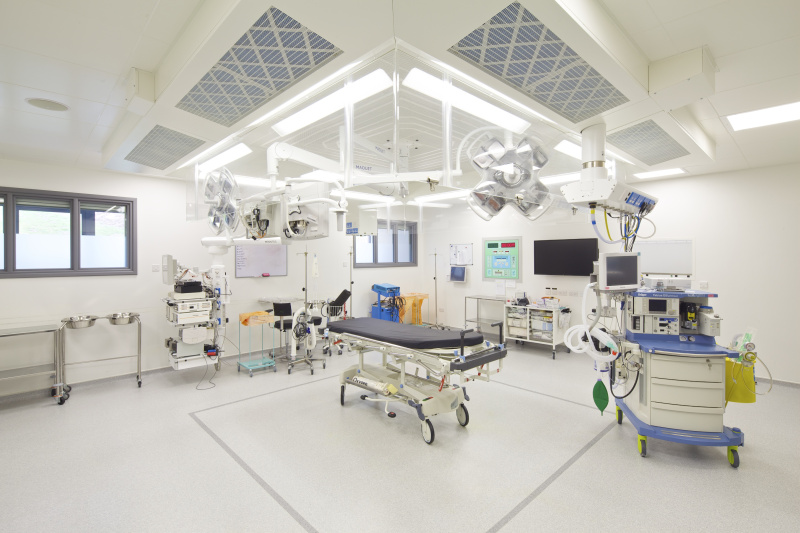
Operating theatres are evolving as technology and surgical methods advance. Increasing numbers of procedures can now be delivered as day cases - with patients arriving, undergoing surgery, often under general anaesthetic, and returning home the same day. This shift is driving the creation of dedicated elective hubs designed to boost capacity and reduce pressure on inpatient theatres.
We specialise in delivering complex healthcare environments and this transformation is not just clinical but architectural. Day case hubs require a compact, streamlined layout where imaging, procedure rooms, waiting areas, recovery and discharge are all co-located for efficient flow.
Inpatient and emergency surgery still depend on traditional theatre suites with high acuity support. Many trusts are progressing fully independent elective hubs to prevent elective workloads from competing with emergency cases.
Retrofitting older estates remains challenging, with many theatres undersized and lacking the ancillary rooms modern practice demands, so creative reconfiguration, not simple refurbishment, is often required.
Innovative ideas such as shared support spaces or “barn” theatres are emerging but require early collaboration to ensure compliance and safety.
What’s clear is that theatres now serve multiple surgical models, each with distinct operational needs. Their evolution is central to increasing NHS capacity, and intelligent design will determine how effectively hospitals can respond.