Nucleus Hospitals
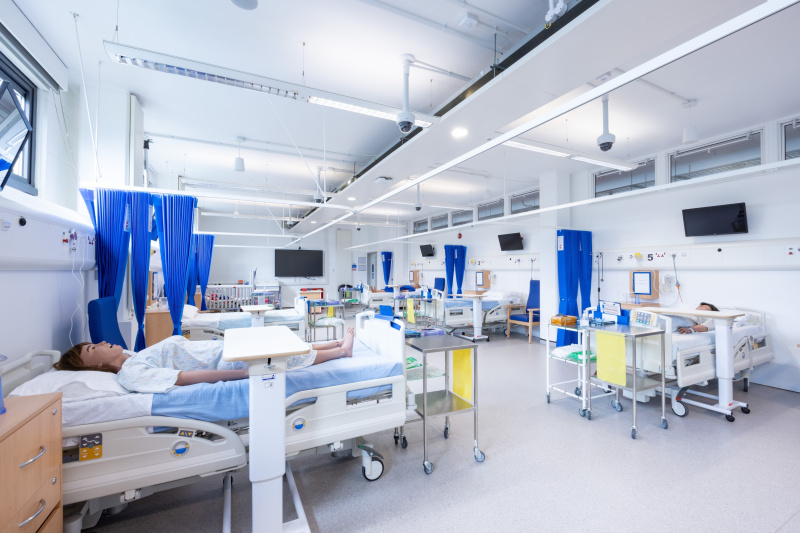
Healthcare training has undergone a major transformation. Instead of relying solely on theory and placements, today’s students learn in simulation environments that replicate real clinical settings - ward bays, side rooms, theatres and wet labs. These facilities allow trainees to practise procedures, communication and complex decision making long before they enter an NHS ward or theatre.
Kendall Kingscott, specialists in healthcare construction, have played a key role in creating these highly realistic spaces at universities including Imperial College London, Southampton University, Brunel Univeristy and Winchester University. Their work ranges from fully modelled ward replicas to advanced control rooms that allow training teams to run real time clinical scenarios. A recent project involved refurbishing an existing outpatients department into a complete simulated theatre and adjoining wet lab, enabling students to rehearse full surgical journeys from prep to postop review. Nearby observation and review rooms allow immediate feedback, strengthening both technical and behavioural skills.
Designing these facilities is fundamentally different from constructing standard clinical spaces. Simulation environments must strike a balance between authenticity and adaptability, with specialist equipment, viewing areas, flexible layoutsand technology rich infrastructure. These are places where students learn, repeat and refine - so the spaces themselves must support experimentation, controlled scenario management and seamless oversight from educators.
Modern mannequins now simulate everything from cardiac arrest to childbirth, providing high stakes, immersive training that was unimaginable a decade ago. But the effectiveness of these tools relies heavily on the environment built around them.
Beyond clinical competence, simulation also reinforces teamwork, communication and patient flow awareness - skills critical for safe, high-quality care. With the demand for well-prepared NHS staff increasing, the role of expertly designed simulation facilities is a crucial part of the NHS pipeline.