Creating a new gym for UCL
Demand on emergency services continues to rise, which means what happens between callouts has become increasingly important - how quickly vehicles can be turned around to go out again, how effectively crews can reset, and how seamlessly systems operate behind the scenes.
This is where ambulance vehicle hubs are becoming more critical.
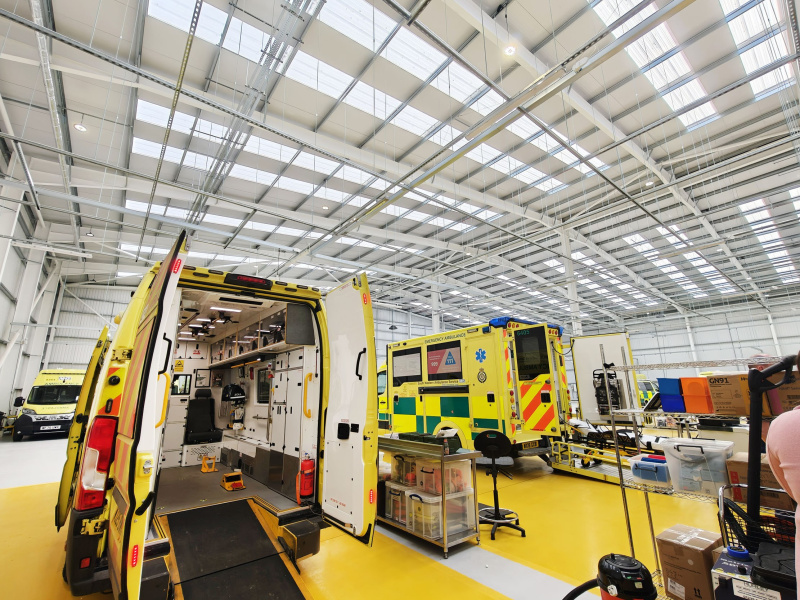
Well-designed hubs are not simply parking and servicing spaces - they are the operation centres, supporting vehicle and staff readiness for regular callouts. The layout, flow and integration of these environments directly influence fleet availability, crew efficiency and ultimately patient care.
Intuitive design for vehicle circulation reduces unnecessary maneuvering and removes delay caused by inbound and outbound vehicles. When areas for arrival, cleaning, restocking and departure are clearly zoned, crews can move through each stage quickly, safely and consistently - minimising logistical delays.
This becomes even more important as ambulance fleets evolve. Larger vehicles, more sophisticated onboard equipment and increasing service pressures all require environments designed around modern operational needs.
Efficiency also depends on careful design and workflow. Maintenance areas, fuelling or charging infrastructure, and stores must be strategically positioned to reduce travel distances and handling time. Small inefficiencies in the layout impact turnaround times and operational performance at scale.
But hubs are not just about vehicles, they are also about people. Ambulance crews operate under intense physical and psychological pressure. Thoughtfully designed welfare spaces provide critical opportunities to rest, reset and recover between callouts. Clear separation between operational and non-operational spaces supports the crew to have downtime in breaks.
Delivering these environments can be challenging as many hubs are upgraded while remaining operational, requiring careful phasing, precise logistics and design solutions that prioritise safety, usability and resilience in live settings.
When ambulance hubs are designed well, they enable faster mobilisation, reduce operational delays and support workforce well-being supporting the delivery of good patient care.